Internal review

Content Review

Packs
4
Stories
27
Beats
135
Cards
95

Export

Review Notes

0 marked stories, 0 reviewed items, 0 item notes.

Use the overall review note for your broad judgment of the story loop. Beat, prompt, and memory-card notes should explain the specific places that work, need revision, or should be removed and reattempted.

Checked with a blank note means reviewed with no specific feedback. Blank and unchecked means not reviewed yet. Review progress is saved in this browser and included in the Markdown and JSON exports.

Pack

latin-vocabulary-early-1

explicitly-registered-fixture

Latin Vocabulary

The First Roman Word

Overall review note
No media

Source

Typeproject-authored-fixture

TitleThe First Roman Word

Licenseproject-authored

Levelearly-1

Story Beats

5
Beat 1beat-setupnarration

A child named {{guide.name}} walks beside her father on a bright morning in Rome. Their sandals tap on the stone street, and people are already gathering in the Forum.

Conceptsroman-forum

Beat 1 note
Beat 2beat-discoverynarration

{{guide.name}} hears her father greet a friend. He smiles and says, "Salve!" {{guide.name}} listens carefully. Salve means hello.

Conceptslatin-salve

Beat 2 note
Beat 3beat-guided-questionchoice

{{guide.name}} wants to remember the new word.

PromptCan you tell me what salve means?

goodbyehellothank you

Expectedhello

Evaluationcorrect if the child chooses hello

Conceptslatin-salve

Beat 3 note
Beat 4beat-recallrecall

{{guide.name}} looks around the busy place where people gather.

PromptCan you remember the name of the busy place?

harborForumgarden

ExpectedForum

Evaluationcorrect if the child chooses Forum

Conceptsroman-forum

Beat 4 note
Beat 5beat-recaprecap

{{guide.name}} learned that salve means hello, and she heard it while walking near the Roman Forum. Tomorrow, she can practice remembering both.

Conceptslatin-salve, roman-forum

Beat 5 note

Memory Cards

3
Card 1card-salve-meaningname-to-concept

PromptWhat does salve mean?

hellogoodbyethank you

Answerhello

Conceptlatin-salve

Initialnew

Card 1 note
Card 2card-salve-wordconcept-to-name

PromptWhich Latin word did {{guide.name}} hear for hello?

salvevaleaqua

Answersalve

Conceptlatin-salve

Initialnew

Card 2 note
Card 3card-forum-placesimple-fact-recall

PromptWhat was the busy place in Rome where people gathered?

the harborthe gardenthe Roman Forum

Answerthe Roman Forum

Conceptroman-forum

Initialnew

Card 3 note

Latin Vocabulary

The Water Word

Overall review note
No media

Source

Typeproject-authored-fixture

TitleThe Water Word

Licenseproject-authored

Levelearly-1

Story Beats

5
Beat 1beat-setupnarration

{{guide.name}} sits near the doorway with a small wax tablet. Her father gives her a cup after the morning walk.

Conceptswax-tablet

Beat 1 note
Beat 2beat-discoverynarration

The cup is filled with water. Her father says, "Aqua." {{guide.name}} listens. Aqua means water.

Conceptslatin-aqua

Beat 2 note
Beat 3beat-guided-questionchoice

{{guide.name}} wants to remember the new word.

PromptCan you tell me what aqua means?

breadwaterroad

Expectedwater

Evaluationcorrect if the child chooses water

Conceptslatin-aqua

Beat 3 note
Beat 4beat-recallrecall

{{guide.name}} traces the word with a stylus on the tablet's soft wax.

PromptWhat did {{guide.name}} write on?

stone wallgarden gatewax tablet

Expectedwax tablet

Evaluationcorrect if the child chooses wax tablet

Conceptswax-tablet

Beat 4 note
Beat 5beat-recaprecap

{{guide.name}} learned that aqua means water, and she practiced the word on a wax tablet. Tomorrow, she can remember both.

Conceptslatin-aqua, wax-tablet

Beat 5 note

Memory Cards

3
Card 1card-aqua-meaningname-to-concept

PromptWhat does aqua mean?

waterbreadroad

Answerwater

Conceptlatin-aqua

Initialnew

Card 1 note
Card 2card-aqua-wordconcept-to-name

PromptWhich Latin word did {{guide.name}} hear for water?

salveaquavia

Answeraqua

Conceptlatin-aqua

Initialnew

Card 2 note
Card 3card-wax-tabletcloze-recall

PromptRomans like {{guide.name}} could write on ___ with a stylus.

stone wallsgarden gateswax tablets

Answerwax tablets

Conceptwax-tablet

Initialnew

Card 3 note

Latin Vocabulary

The Road Word

Overall review note
No media

Source

Typeproject-authored-fixture

TitleThe Road Word

Licenseproject-authored

Levelearly-1

Story Beats

5
Beat 1beat-setupnarration

{{guide.name}} walks with her father after the sun is high. A long stone road runs past the houses and out toward the fields.

Conceptsroman-road

Beat 1 note
Beat 2beat-discoverynarration

Her father points to the road and says, "Via." {{guide.name}} listens. Via means road.

Conceptslatin-via

Beat 2 note
Beat 3beat-guided-questionchoice

{{guide.name}} wants to remember the new word.

PromptCan you tell me what via means?

bookroadmoon

Expectedroad

Evaluationcorrect if the child chooses road

Conceptslatin-via

Beat 3 note
Beat 4beat-recallrecall

{{guide.name}} looks down at the stones under her feet.

PromptWhat was the road made from?

soft waxflat stonesgreen leaves

Expectedflat stones

Evaluationcorrect if the child chooses flat stones

Conceptsroman-road

Beat 4 note
Beat 5beat-recaprecap

{{guide.name}} learned that via means road, and she saw a Roman road made from flat stones. Tomorrow, she can remember both.

Conceptslatin-via, roman-road

Beat 5 note

Memory Cards

3
Card 1card-via-meaningname-to-concept

PromptWhat does via mean?

roadbookmoon

Answerroad

Conceptlatin-via

Initialnew

Card 1 note
Card 2card-via-wordconcept-to-name

PromptWhich Latin word did {{guide.name}} hear for road?

aquaviasalve

Answervia

Conceptlatin-via

Initialnew

Card 2 note
Card 3card-roman-roadsimple-fact-recall

PromptWhat was the Roman road made from?

soft waxgreen leavesflat stones

Answerflat stones

Conceptroman-road

Initialnew

Card 3 note

Latin Vocabulary

The Home Word

Overall review note
An illustrated view inside a Roman house, showing rooms and people around an open central space.
The interior of a Roman house, from Dialogues of Roman Life, 1913. Public domain.

Source

Typeproject-authored-fixture

TitleThe Home Word

Licenseproject-authored

Levelearly-1

Story Beats

5
Beat 1beat-setupnarration

{{guide.name}} walks home on the stone via. She carries a small cup of aqua and remembers the road word and the water word.

Conceptslatin-via, latin-aqua

Beat 1 note
Beat 2beat-discoverynarration

Her father points to their doorway and says, "Domus." {{guide.name}} listens. Domus means home.

Conceptslatin-domus, roman-house

Beat 2 note
Beat 3beat-guided-questionchoice

{{guide.name}} wants to remember the new word.

PromptCan you tell me what domus means?

roadhomewater

Expectedhome

Evaluationcorrect if the child chooses home

Conceptslatin-domus

Beat 3 note
Beat 4beat-recallrecall

Before she goes inside, {{guide.name}} remembers one old word too.

PromptWhich Latin word means water?

salveviaaqua

Expectedaqua

Evaluationcorrect if the child chooses aqua

Conceptslatin-aqua

Beat 4 note
Beat 5beat-recaprecap

{{guide.name}} learned that domus means home. She also remembered that aqua means water and via means road.

Conceptslatin-domus, latin-aqua, latin-via

Beat 5 note

Memory Cards

3
Card 1card-domus-meaningname-to-concept

PromptWhat does domus mean?

homeroadwater

Answerhome

Conceptlatin-domus

Initialnew

Card 1 note
Card 2card-domus-wordconcept-to-name

PromptWhich Latin word did {{guide.name}} hear for home?

viadomusaqua

Answerdomus

Conceptlatin-domus

Initialnew

Card 2 note
Card 3card-roman-housesimple-fact-recall

PromptWhat Roman-world place is a domus?

a Roman roada Roman housethe Forum

Answera Roman house

Conceptroman-house

Initialnew

Card 3 note

Pack

aesop-fables-early-1

explicitly-registered-fixture

Aesop's Fables

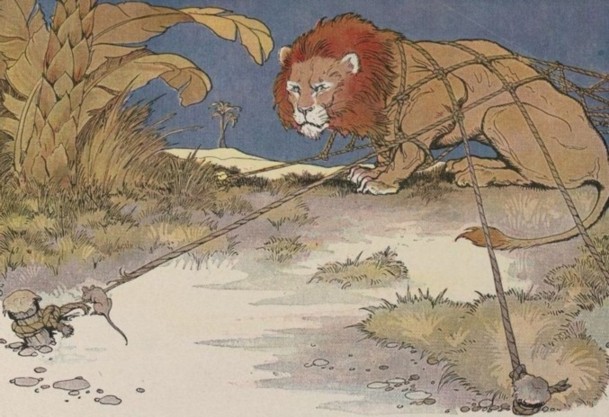
The Lion and the Mouse

Source
Overall review note
A mouse stands near a lion whose paw is caught in a net.
Illustration by Milo Winter, from Project Gutenberg etext 19994.

Source

Typepublic-domain-text

TitleThe Aesop for Children

CreatorAesop

Licensepublic-domain-us

Levelearly-1

Story Beats

5
Beat 1beat-setupnarration

A mighty lion sleeps in the warm grass. A small mouse runs across his paw and wakes him.

Conceptslion, mouse

Beat 1 note
Beat 2beat-discoverynarration

The lion catches the mouse. The mouse begs to go free and promises, "One day I may help you." The lion is surprised, but he lets the mouse go.

Conceptslet-go, mouse

Beat 2 note
Beat 3beat-guided-questionchoice

The lion had power over the mouse, but he chose not to hurt him.

PromptWhat did the lion choose not to do?

climb the treebite the nethurt the mouse

Expectedhurt the mouse

Evaluationcorrect if the child chooses hurt the mouse

Conceptslet-go

Beat 3 note
Beat 4beat-recallrecall

Later, hunters trap the lion in a net. The mouse hears him roar and runs to help.

PromptWhat trapped the lion?

netrivertree

Expectednet

Evaluationcorrect if the child chooses net

Conceptsnet

Beat 4 note
Beat 5beat-recaprecap

The mouse bites through the net and frees the lion. The small mouse helps the great lion escape.

Conceptsmouse, net, let-go

Beat 5 note

Memory Cards

3
Card 1card-lion-choicesimple-fact-recall

PromptWhat did the lion choose not to do?

climb the treehurt the mousebite the net

Answerhurt the mouse

Conceptlet-go

Initialnew

Card 1 note
Card 2card-net-trapsimple-fact-recall

PromptWhat trapped the lion?

netrivertree

Answernet

Conceptnet

Initialnew

Card 2 note
Card 3card-mouse-helperconcept-to-name

PromptWhich small animal helped the lion?

foxcrowmouse

Answermouse

Conceptmouse

Initialnew

Card 3 note

Aesop's Fables

The Crow and the Pitcher

Source
Overall review note
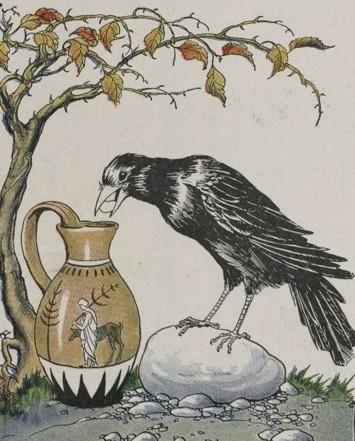
A crow stands beside a pitcher, dropping pebbles into it to raise the water.
Illustration by Milo Winter, from Project Gutenberg etext 19994.

Source

Typepublic-domain-text

TitleThe Aesop for Children

CreatorAesop

Licensepublic-domain-us

Levelearly-1

Story Beats

5
Beat 1beat-setupnarration

A thirsty crow flies over the dry fields. He looks and looks for water.

Conceptscrow, thirst

Beat 1 note
Beat 2beat-discoverynarration

At last, the crow sees a pitcher. There is water inside, but it is too low for his beak to reach.

Conceptspitcher, water-level, crow

Beat 2 note
Beat 3beat-guided-questionchoice

The crow does not give up. He thinks about the low water and the stones on the ground.

PromptWhat problem does the crow need to solve?

the pitcher is fullthe water is too lowthe stones are gone

Expectedthe water is too low

Evaluationcorrect if the child chooses the water is too low

Conceptswater-level

Beat 3 note
Beat 4beat-recallrecall

The crow picks up small pebbles and drops them into the pitcher, one by one.

PromptWhat does the crow drop into the pitcher?

leavesberriespebbles

Expectedpebbles

Evaluationcorrect if the child chooses pebbles

Conceptspebbles, pitcher

Beat 4 note
Beat 5beat-recaprecap

Each pebble makes the water rise a little higher. Soon the crow can reach the water and drink.

Conceptspebbles, water-level, thirst

Beat 5 note

Memory Cards

4
Card 1card-crow-needsimple-fact-recall

PromptWhat does the thirsty crow need?

waterbreada net

Answerwater

Conceptthirst

Initialnew

Card 1 note
Card 2card-pitcher-containername-to-concept

PromptWhat is a pitcher?

a small birda container for watera kind of stone

Answera container for water

Conceptpitcher

Initialnew

Card 2 note
Card 3card-pebbles-actionsimple-fact-recall

PromptWhat does the crow drop into the pitcher?

leavesberriespebbles

Answerpebbles

Conceptpebbles

Initialnew

Card 3 note
Card 4card-water-levelconcept-to-name

PromptWhat rises when the crow drops in pebbles?

water levelgrasssun

Answerwater level

Conceptwater-level

Initialnew

Card 4 note

Aesop's Fables

The Dog and His Reflection

Source
Overall review note
No media

Source

Typepublic-domain-text

TitleThe Aesop for Children

CreatorAesop

Licensepublic-domain-us

Levelearly-1

Story Beats

5
Beat 1beat-setupnarration

A dog trots home with a piece of meat in his mouth. He feels lucky and proud.

Conceptsdog, meat

Beat 1 note
Beat 2beat-discoverynarration

The dog walks across a bridge and looks down into the water. He sees another dog with another piece of meat.

Conceptsreflection, bridge, water

Beat 2 note
Beat 3beat-guided-questionchoice

The dog does not know he is looking at his own reflection.

PromptWhat is the dog really seeing in the water?

another bridgea birdhis reflection

Expectedhis reflection

Evaluationcorrect if the child chooses his reflection

Conceptsreflection

Beat 3 note
Beat 4beat-recallrecall

The dog wants the other meat too. He opens his mouth to grab it.

PromptWhat is the dog carrying in his mouth?

meata pebblea leaf

Expectedmeat

Evaluationcorrect if the child chooses meat

Conceptsmeat, open-mouth

Beat 4 note
Beat 5beat-recaprecap

When the dog opens his mouth, his own meat falls into the water. He loses the meat he already had.

Conceptsopen-mouth, meat, water

Beat 5 note

Memory Cards

3
Card 1card-reflection-meaningname-to-concept

PromptWhat is a reflection?

a piece of meatan image in watera bridge

Answeran image in water

Conceptreflection

Initialnew

Card 1 note
Card 2card-dog-carryingsimple-fact-recall

PromptWhat is the dog carrying?

a pebblea leafa piece of meat

Answera piece of meat

Conceptmeat

Initialnew

Card 2 note
Card 3card-dog-loses-meatsimple-fact-recall

PromptWhat falls when the dog opens his mouth?

the meat fallsthe bridge breaksthe dog keeps both pieces

Answerthe meat falls

Conceptopen-mouth

Initialnew

Card 3 note

Aesop's Fables

The Hare and the Tortoise

Source
Overall review note
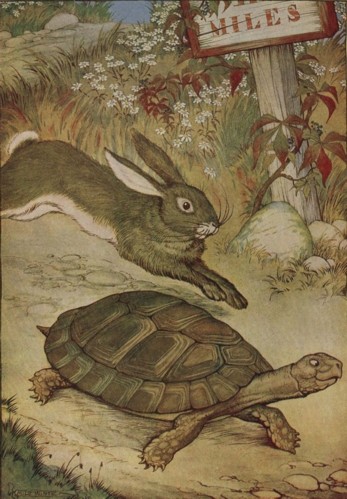
A tortoise moves steadily along a path while a hare rests nearby.
Illustration by Milo Winter, from Project Gutenberg etext 19994.

Source

Typepublic-domain-text

TitleThe Aesop for Children

CreatorAesop

Licensepublic-domain-us

Levelearly-1

Story Beats

5
Beat 1beat-setupnarration

A fast hare laughs at a slow tortoise. The hare says the tortoise could never win a race.

Conceptshare, tortoise, race

Beat 1 note
Beat 2beat-discoverynarration

The tortoise answers calmly, "Let us try." The race begins, and the hare runs far ahead.

Conceptsrace, keeps-moving, hare

Beat 2 note
Beat 3beat-guided-questionchoice

The hare runs far ahead. Then he lies down beside the path and falls asleep.

PromptWhat does the hare do beside the path?

drops pebblesfalls asleepbites a net

Expectedfalls asleep

Evaluationcorrect if the child chooses falls asleep

Conceptshare-sleeps

Beat 3 note
Beat 4beat-recallrecall

The tortoise keeps moving slowly and steadily. Step by step, he passes the sleeping hare.

PromptWho keeps moving slowly and steadily?

hareliontortoise

Expectedtortoise

Evaluationcorrect if the child chooses tortoise

Conceptstortoise, keeps-moving

Beat 4 note
Beat 5beat-recaprecap

The tortoise reaches the finish first. The hare wakes too late. The slow tortoise wins because he keeps moving.

Conceptskeeps-moving, race, hare-sleeps

Beat 5 note

Memory Cards

4
Card 1card-tortoise-steadyconcept-to-name

PromptWho keeps moving slowly and steadily?

tortoiseharelion

Answertortoise

Concepttortoise

Initialnew

Card 1 note
Card 2card-hare-sleepssimple-fact-recall

PromptWhat does the hare do beside the path?

drops pebblesfalls asleepbites a net

Answerfalls asleep

Concepthare-sleeps

Initialnew

Card 2 note
Card 3card-tortoise-actionsimple-fact-recall

PromptWhat does the tortoise keep doing?

sleepinglaughingmoving

Answermoving

Conceptkeeps-moving

Initialnew

Card 3 note
Card 4card-race-winnersimple-fact-recall

PromptWhat happens at the finish line?

the hare napsthe tortoise winsthe mouse runs

Answerthe tortoise wins

Conceptrace

Initialnew

Card 4 note

Aesop's Fables

The Fox and the Grapes

Source
Overall review note
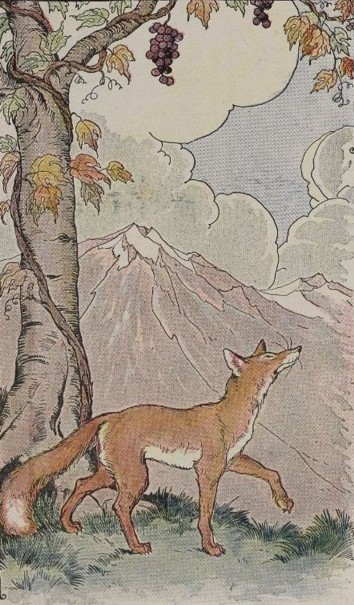
A fox looks up at grapes hanging high on a vine.
Illustration by Milo Winter, from Project Gutenberg etext 19994.

Source

Typepublic-domain-text

TitleThe Aesop for Children

CreatorAesop

Licensepublic-domain-us

Levelearly-1

Story Beats

5
Beat 1beat-setupnarration

A hungry fox walks through a field. He sees a bunch of grapes hanging from a high vine.

Conceptsfox, grapes, vine

Beat 1 note
Beat 2beat-discoverynarration

The grapes look sweet and juicy. The fox wants them very much.

Conceptsgrapes, fox

Beat 2 note
Beat 3beat-guided-questionchoice

The grapes hang too high for the fox to reach from the ground.

PromptWhat does the fox want to eat?

breadgrapespebbles

Expectedgrapes

Evaluationcorrect if the child chooses grapes

Conceptsgrapes

Beat 3 note
Beat 4beat-recallrecall

The fox jumps again and again. He still cannot reach the grapes.

PromptWhat does the fox do to reach the grapes?

runs awayfalls asleepjumps

Expectedjumps

Evaluationcorrect if the child chooses jumps

Conceptsjumping

Beat 4 note
Beat 5beat-recaprecap

At last, the fox walks away. He says the grapes are probably sour, but he says this after he cannot reach them.

Conceptssour-grapes, grapes

Beat 5 note

Memory Cards

3
Card 1card-fox-wantssimple-fact-recall

PromptWhat does the fox want to eat?

breadgrapespebbles

Answergrapes

Conceptgrapes

Initialnew

Card 1 note
Card 2card-grapes-locationsimple-fact-recall

PromptWhere are the grapes hanging?

in a netunder a bridgeon a vine

Answeron a vine

Conceptvine

Initialnew

Card 2 note
Card 3card-fox-actionsimple-fact-recall

PromptWhat does the fox do to try to reach the grapes?

jumpsswimssleeps

Answerjumps

Conceptjumping

Initialnew

Card 3 note

Aesop's Fables

The Fox and the Crow

Source
Overall review note
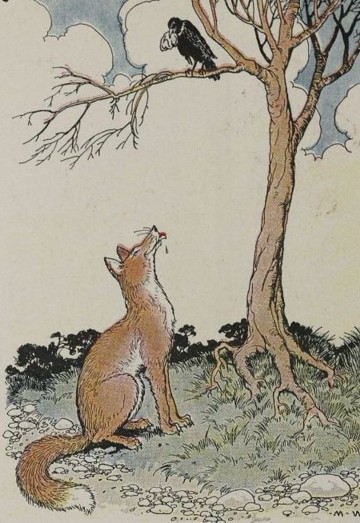
A fox looks up at a crow perched on a branch with cheese in her beak.
Illustration by Milo Winter, from Project Gutenberg etext 19994.

Source

Typepublic-domain-text

TitleThe Aesop for Children

CreatorAesop

Licensepublic-domain-us

Levelearly-1

Story Beats

5
Beat 1beat-setupnarration

A crow sits on a tree branch with a piece of cheese in her beak. A fox sees the cheese and wants it.

Conceptscrow, tree-branch, cheese, fox

Beat 1 note
Beat 2beat-discoverynarration

The fox walks to the tree and speaks sweetly to the crow. He calls her beautiful.

Conceptsfox, crow, tree-branch

Beat 2 note
Beat 3beat-guided-questionchoice

The crow keeps the cheese in her beak and watches the fox.

PromptWhere is the cheese?

in a pitcherin the crow's beakunder a cloak

Expectedin the crow's beak

Evaluationcorrect if the child chooses in the crow's beak

Conceptscheese, crow

Beat 3 note
Beat 4beat-recallrecall

The fox says the crow must have a lovely voice. The crow wants to sing.

PromptWhat does the fox ask the crow to do?

singcarry sticksrun a race

Expectedsing

Evaluationcorrect if the child chooses sing

Conceptsfox, crow, song

Beat 4 note
Beat 5beat-recaprecap

The crow opens her beak to caw. The cheese falls down, and the fox catches it.

Conceptscrow, song, cheese, fox

Beat 5 note

Memory Cards

4
Card 1card-crow-foodsimple-fact-recall

PromptWhat food does the crow hold?

graincheesegrapes

Answercheese

Conceptcheese

Initialnew

Card 1 note
Card 2card-fox-wantssimple-fact-recall

PromptWho wants the crow's cheese?

the travelerthe mousethe fox

Answerthe fox

Conceptfox

Initialnew

Card 2 note
Card 3card-crow-actionsimple-fact-recall

PromptWhat does the crow do after the fox praises her voice?

opens her beakbreaks a stickdrops pebbles

Answeropens her beak

Conceptsong

Initialnew

Card 3 note
Card 4card-cheese-fallssimple-fact-recall

PromptWhat happens when the crow opens her beak?

the Sun shinesthe cheese fallsthe dog barks

Answerthe cheese falls

Conceptcheese

Initialnew

Card 4 note

Aesop's Fables

The Ants and the Grasshopper

Source
Overall review note
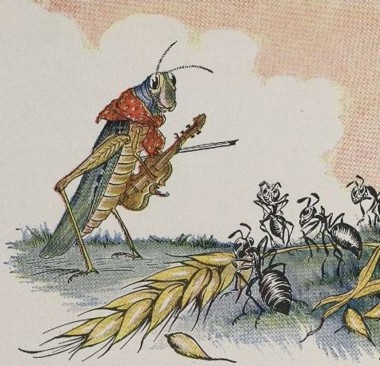
Ants carry food while a grasshopper watches nearby.
Illustration by Milo Winter, from Project Gutenberg etext 19994.

Source

Typepublic-domain-text

TitleThe Aesop for Children

CreatorAesop

Licensepublic-domain-us

Levelearly-1

Story Beats

5
Beat 1beat-setupnarration

On a warm summer day, the ants carry grain back to their home. They are storing food.

Conceptsants, grain, storing-food

Beat 1 note
Beat 2beat-discoverynarration

A grasshopper sees the ants working. He sings in the sun instead of storing food.

Conceptsgrasshopper, singing, storing-food

Beat 2 note
Beat 3beat-guided-questionchoice

The ants carry food while the weather is warm.

PromptWhat do the ants carry?

graina neta tablet

Expectedgrain

Evaluationcorrect if the child chooses grain

Conceptsgrain, ants

Beat 3 note
Beat 4beat-recallrecall

When winter comes, food is hard to find. The grasshopper has no food stored.

PromptWhen is food hard to find?

summermorningwinter

Expectedwinter

Evaluationcorrect if the child chooses winter

Conceptswinter

Beat 4 note
Beat 5beat-recaprecap

The ants have grain because they stored food earlier. The grasshopper has no food stored when winter comes.

Conceptsstoring-food, grain, grasshopper

Beat 5 note

Memory Cards

3
Card 1card-ants-carrysimple-fact-recall

PromptWhat do the ants carry?

a netgraina tablet

Answergrain

Conceptgrain

Initialnew

Card 1 note
Card 2card-grasshopper-actionsimple-fact-recall

PromptWhat does the grasshopper do in the sun?

jumps into watercarries grainsings

Answersings

Conceptsinging

Initialnew

Card 2 note
Card 3card-winter-foodsimple-fact-recall

PromptWhen is food hard to find?

wintersummermorning

Answerwinter

Conceptwinter

Initialnew

Card 3 note

Aesop's Fables

The Bundle of Sticks

Source
Overall review note
No media

Source

Typepublic-domain-text

TitleThe Aesop for Children

CreatorAesop

Licensepublic-domain-us

Levelearly-1

Story Beats

5
Beat 1beat-setupnarration

A father has several children. The children often quarrel with one another.

Conceptsfather, children, quarreling

Beat 1 note
Beat 2beat-discoverynarration

The father brings a bundle of sticks. He asks the children to try to break the bundle.

Conceptsbundle, sticks, breaking

Beat 2 note
Beat 3beat-guided-questionchoice

The children try, but the bundle is too hard to break.

PromptWhat does the father bring?

a pitchera bundle of sticksa piece of meat

Expecteda bundle of sticks

Evaluationcorrect if the child chooses a bundle of sticks

Conceptsbundle, sticks

Beat 3 note
Beat 4beat-recallrecall

Then the father unties the bundle. He gives the children one stick at a time.

PromptWhat does the father do to the bundle?

throws it awaypaints itunties it

Expectedunties it

Evaluationcorrect if the child chooses unties it

Conceptsbundle

Beat 4 note
Beat 5beat-recaprecap

The children see that one stick is easy to break, but the bundle is hard to break because the sticks stay together.

Conceptssticks, together, breaking

Beat 5 note

Memory Cards

3
Card 1card-father-bringssimple-fact-recall

PromptWhat does the father bring?

a pitchera bundle of sticksa piece of meat

Answera bundle of sticks

Conceptbundle

Initialnew

Card 1 note
Card 2card-bundle-meaningname-to-concept

PromptWhat is a bundle?

a kind of birda Roman greetingthings tied together

Answerthings tied together

Conceptbundle

Initialnew

Card 2 note
Card 3card-one-stickcloze-recall

PromptThe children saw that ___ was easy to break, but the bundle was hard to break.

one stickthe whole bundlethe bridge

Answerone stick

Conceptsticks

Initialnew

Card 3 note

Aesop's Fables

The North Wind and the Sun

Source
Overall review note
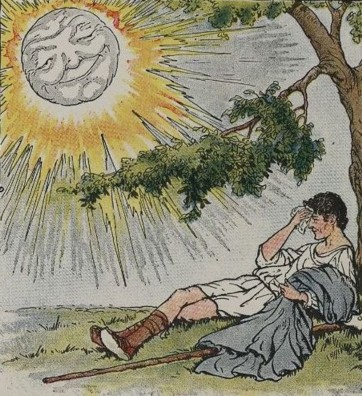
The sun shines warmly while a traveler removes his cloak beside the road.
Illustration by Milo Winter, from Project Gutenberg etext 19994.

Source

Typepublic-domain-text

TitleThe Aesop for Children

CreatorAesop

Licensepublic-domain-us

Levelearly-1

Story Beats

5
Beat 1beat-setupnarration

The North Wind and the Sun argue about which one is stronger. A traveler walks along the road wearing a cloak.

Conceptsnorth-wind, sun, traveler, cloak

Beat 1 note
Beat 2beat-discoverynarration

The North Wind tries first. He sends a cold, howling blast against the traveler.

Conceptsnorth-wind, traveler, cloak

Beat 2 note
Beat 3beat-guided-questionchoice

The cold wind whips the cloak around the traveler. The traveler pulls the cloak close.

PromptWhat does the traveler do when the wind blows?

wraps the cloak tighterdrops pebblesfalls asleep

Expectedwraps the cloak tighter

Evaluationcorrect if the child chooses wraps the cloak tighter

Conceptscloak, traveler

Beat 3 note
Beat 4beat-recallrecall

Then the Sun shines gently. The air grows warmer and warmer.

PromptWhat makes the traveler warm?

a netthe Sunsour grapes

Expectedthe Sun

Evaluationcorrect if the child chooses the Sun

Conceptssun, warm-rays

Beat 4 note
Beat 5beat-recaprecap

At last, the traveler takes off his cloak and rests in the shade. The Sun wins by using warmth instead of force.

Conceptssun, warm-rays, cloak, traveler

Beat 5 note

Memory Cards

4
Card 1card-north-windconcept-to-name

PromptWho argues with the Sun?

the tortoisethe crowthe North Wind

Answerthe North Wind

Conceptnorth-wind

Initialnew

Card 1 note
Card 2card-traveler-cloaksimple-fact-recall

PromptWhat is the traveler wearing?

a cloaka bundle of sticksa pitcher

Answera cloak

Conceptcloak

Initialnew

Card 2 note
Card 3card-wind-actionsimple-fact-recall

PromptWhat does the traveler do when the wind blows?

drops the cloakholds the cloak tighterstarts a race

Answerholds the cloak tighter

Conceptcloak

Initialnew

Card 3 note
Card 4card-sun-actionsimple-fact-recall

PromptWhat makes the traveler take off the cloak?

the warm Sunthe cold windthe barking dog

Answerthe warm Sun

Conceptwarm-rays

Initialnew

Card 4 note

Aesop's Fables

The Town Mouse and the Country Mouse

Source
Overall review note
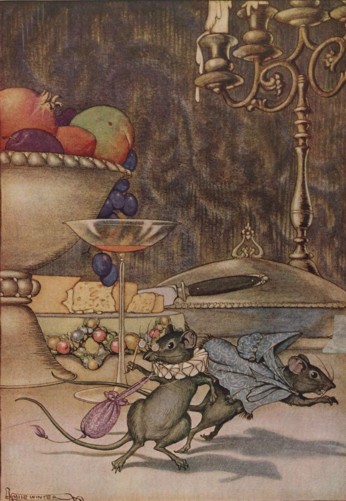
A town mouse and a country mouse stand near a table set with rich food.
Illustration by Milo Winter, from Project Gutenberg etext 19994.

Source

Typepublic-domain-text

TitleThe Aesop for Children

CreatorAesop

Licensepublic-domain-us

Levelearly-1

Story Beats

5
Beat 1beat-setupnarration

A Town Mouse visits a Country Mouse. The Country Mouse serves simple food: wheat, roots, acorns, and water.

Conceptstown-mouse, country-mouse, simple-food

Beat 1 note
Beat 2beat-discoverynarration

The Town Mouse talks about life in the city. The Country Mouse listens and dreams about city luxuries.

Conceptstown-mouse, country-mouse, city-life

Beat 2 note
Beat 3beat-guided-questionchoice

The Country Mouse goes with the Town Mouse to the city. They find rich food on a table.

PromptWhere do the mice find rich food?

on a tableinside a pitcherunder a bundle

Expectedon a table

Evaluationcorrect if the child chooses on a table

Conceptsrich-food, city-life

Beat 3 note
Beat 4beat-recallrecall

Before the Country Mouse can eat, a cat mews at the door. The mice run and hide.

PromptWhat frightens the mice?

a cata tortoisethe Sun

Expecteda cat

Evaluationcorrect if the child chooses a cat

Conceptscat, hiding-place

Beat 4 note
Beat 5beat-recaprecap

The Country Mouse leaves the city. She chooses simple food and safety in the country.

Conceptscountry-mouse, simple-food, safety

Beat 5 note

Memory Cards

4
Card 1card-country-foodsimple-fact-recall

PromptWhat food does the Country Mouse serve first?

golden eggssimple foodcheese in a beak

Answersimple food

Conceptsimple-food

Initialnew

Card 1 note
Card 2card-city-foodsimple-fact-recall

PromptWhat do the mice find in the city?

a neta cloakrich food

Answerrich food

Conceptrich-food

Initialnew

Card 2 note
Card 3card-city-dangersimple-fact-recall

PromptWhat scares the mice in the city?

a cata crowa grasshopper

Answera cat

Conceptcat

Initialnew

Card 3 note
Card 4card-country-choicesimple-fact-recall

PromptWhat does the Country Mouse choose at the end?

a racesimple food and safetya pitcher of water

Answersimple food and safety

Conceptsafety

Initialnew

Card 4 note

Aesop's Fables

The Wolf and the Kid

Source
Overall review note
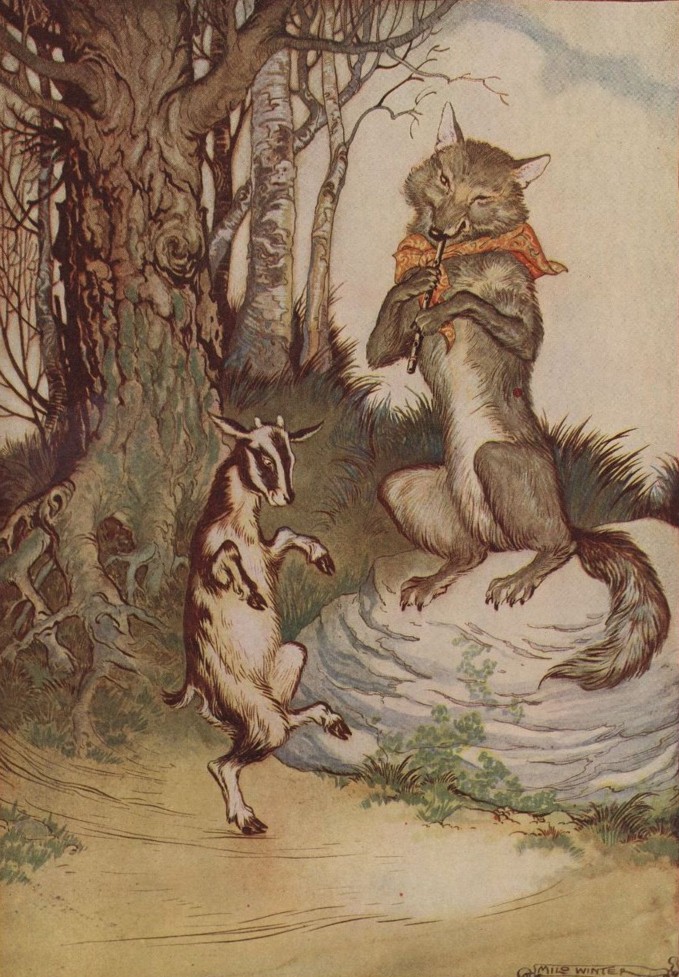
A wolf pipes a tune while a young goat dances nearby.
Illustration by Milo Winter, from Project Gutenberg etext 19994.

Source

Typepublic-domain-text

TitleThe Aesop for Children

CreatorAesop

Licensepublic-domain-us

Levelearly-1

Story Beats

5
Beat 1beat-setupnarration

A young goat, called a Kid, thinks he is big enough to take care of himself. When his mother calls, he stays in the pasture and keeps nibbling grass.

Conceptskid, mother, pasture

Beat 1 note
Beat 2beat-guided-questionchoice

A little later, the Kid lifts his head and sees that the flock is gone.

PromptWho called the Kid home?

the foxhis motherthe crow

Expectedhis mother

Evaluationcorrect if the child chooses his mother

Conceptskid, mother, flock

Beat 2 note
Beat 3beat-dangernarration

The Kid starts running across the field. Before he gets far, he meets the Wolf.

Conceptskid, field, wolf

Beat 3 note
Beat 4beat-recallrecall

The Kid asks the Wolf to pipe a tune. The Wolf likes the idea and begins to play while the Kid dances.

PromptWhat does the Kid ask the Wolf to do?

pipe a tunedrop pebblescarry sticks

Expectedpipe a tune

Evaluationcorrect if the child chooses pipe a tune

Conceptskid, wolf, tune, dance

Beat 4 note
Beat 5beat-recaprecap

The Shepherd Dogs hear the Wolf's piping. They race back to the pasture, and the Wolf runs away.

Conceptsshepherd-dogs, wolf, pasture, tune

Beat 5 note

Memory Cards

4
Card 1card-kid-stayssimple-fact-recall

PromptWho stays behind in the pasture?

the travelerthe Kidthe tortoise

Answerthe Kid

Conceptkid

Initialnew

Card 1 note
Card 2card-kid-meetssimple-fact-recall

PromptWho does the Kid meet in the field?

the mousethe crowthe Wolf

Answerthe Wolf

Conceptwolf

Initialnew

Card 2 note
Card 3card-wolf-tunesimple-fact-recall

PromptWhat does the Kid ask the Wolf to pipe?

a tunea racea bundle

Answera tune

Concepttune

Initialnew

Card 3 note
Card 4card-dogs-chasesimple-fact-recall

PromptWho chases the Wolf away?

the antsthe Shepherd Dogsthe Sun

Answerthe Shepherd Dogs

Conceptshepherd-dogs

Initialnew

Card 4 note

Aesop's Fables

The Milkmaid and Her Pail

Source
Overall review note
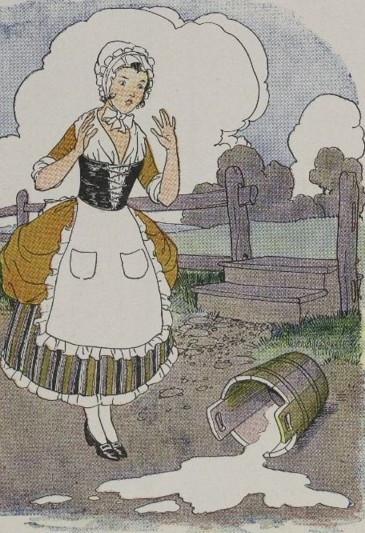
A milkmaid walks with a pail balanced on her head.
Illustration by Milo Winter, from Project Gutenberg etext 19994.

Source

Typepublic-domain-text

TitleThe Aesop for Children

CreatorAesop

Licensepublic-domain-us

Levelearly-1

Story Beats

5
Beat 1beat-setupnarration

A milkmaid walks home from the field. She carries a pail of milk balanced on her head.

Conceptsaesop-milkmaid-pail, milkmaid, milk-pail, milk

Beat 1 note
Beat 2beat-discoverynarration

As she walks, she thinks about the rich milk. She imagines making butter and selling it at the market.

Conceptsmilkmaid, milk, butter, market-plan

Beat 2 note
Beat 3beat-guided-questionchoice

The milkmaid thinks the money could buy eggs for hatching.

PromptWhat does the milkmaid imagine buying?

eggsa neta cloak

Expectedeggs

Evaluationcorrect if the child chooses eggs

Conceptseggs, market-plan

Beat 3 note
Beat 4beat-recallrecall

Then the milkmaid imagines wearing a new dress to the fair. She tosses her head proudly.

PromptWhat does the milkmaid toss?

her heada bundle of stickssmall pebbles

Expectedher head

Evaluationcorrect if the child chooses her head

Conceptshead-toss, fair-plan

Beat 4 note
Beat 5beat-recaprecap

When the milkmaid tosses her head, the pail falls down. The milk spills on the ground, and all her imagined plans vanish.

Conceptshead-toss, milk-pail, spilled-milk, market-plan

Beat 5 note

Memory Cards

4
Card 1card-milkmaid-carriessimple-fact-recall

PromptWhat does the milkmaid carry on her head?

a pail of milka piece of cheesea bundle of sticks

Answera pail of milk

Conceptmilk-pail

Initialnew

Card 1 note
Card 2card-butter-plansimple-fact-recall

PromptWhat does the milkmaid imagine making from the milk?

a cloakbuttera net

Answerbutter

Conceptbutter

Initialnew

Card 2 note
Card 3card-eggs-plansimple-fact-recall

PromptWhat does the milkmaid imagine buying with the money?

grapespebbleseggs

Answereggs

Concepteggs

Initialnew

Card 3 note
Card 4card-milk-spillscloze-recall

PromptWhen the milkmaid tosses her head, the milk ___.

spillssingswins

Answerspills

Conceptspilled-milk

Initialnew

Card 4 note

Pack

art-history-looking-early-1

explicitly-registered-fixture

Art History

The Greek Jar

Source
Overall review note
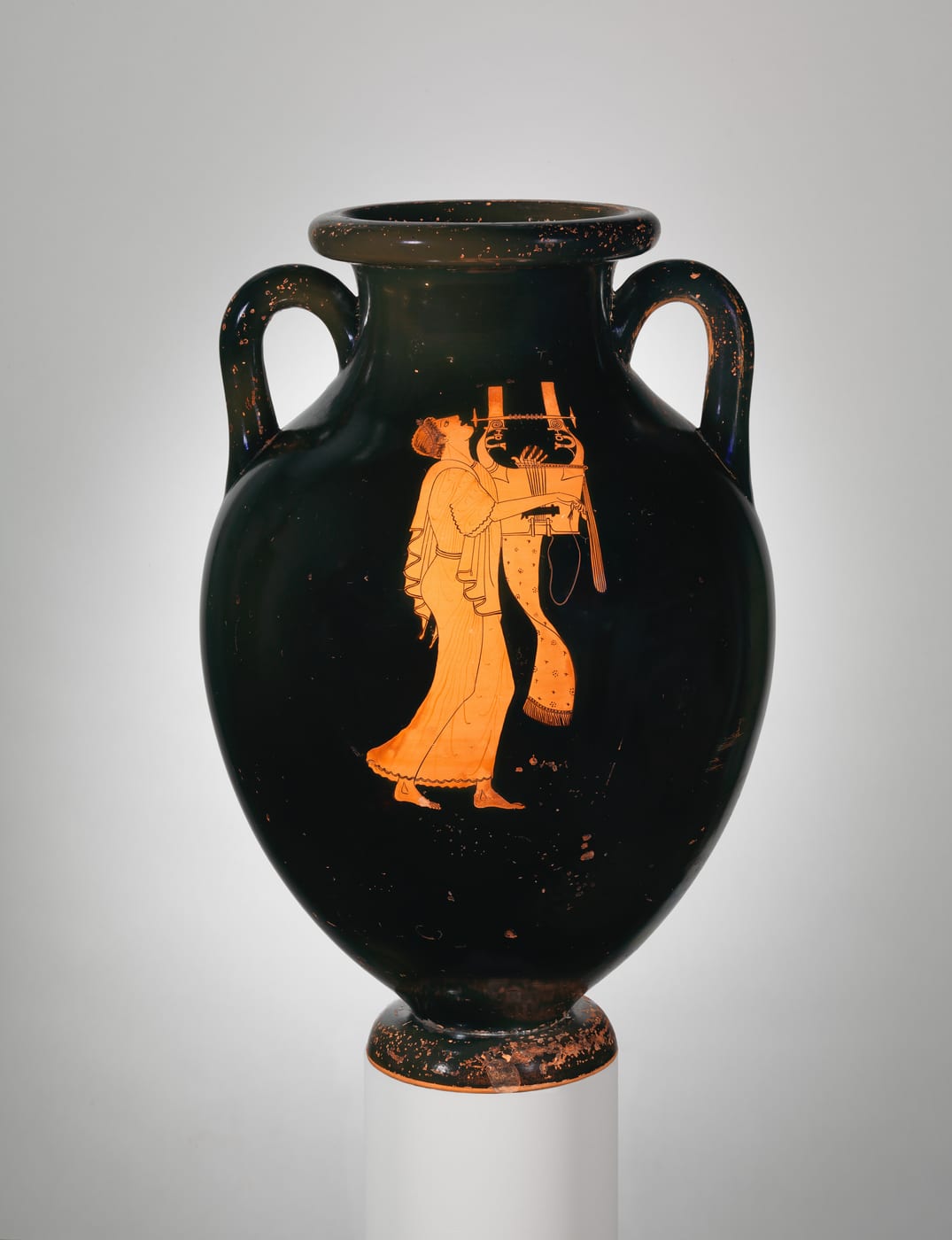
A Greek terracotta amphora painted with a standing figure holding a lyre.
Greek Attic terracotta amphora attributed to the Berlin Painter, from The Metropolitan Museum of Art Open Access collection.

Source

Typeartwork

TitleTerracotta amphora (jar)

CreatorAttributed to the Berlin Painter

Licensepublic-domain

Levelearly-1

Story Beats

5
Beat 1beat-setupnarration

This is an ancient Greek jar called an amphora. An amphora could hold things like oil or wine.

Conceptsamphora, ancient-greek

Beat 1 note
Beat 2beat-guided-questionchoicevisible-evidence

The jar is made from terracotta, a kind of baked clay. Its tall shape has a neck, a body, and handles.

PromptWhat material is this jar made from?

terracotta clayblue glasswhite marble

Expectedterracotta clay

Evaluationcorrect if the child chooses terracotta clay

Look first

Look at the warm clay color of the jar.

The surface has a warm baked-clay color.

Conceptsterracotta, amphora

Beat 2 note
Beat 3beat-makernarration

The Metropolitan Museum of Art also gives an artist-name fact: scholars attribute this jar to the Berlin Painter.

Conceptsberlin-painter, museum-attribution

Beat 3 note
Beat 4beat-recallrecallvisible-evidence

This kind of Greek vase used a red-figure technique. The figures stay reddish clay color while the background is painted dark.

PromptWhat technique did this Greek vase use?

red-figure techniquewoodblock printingweaving

Expectedred-figure technique

Evaluationcorrect if the child chooses red-figure technique

Look first

Look at the painted figure and the dark background.

The figure stays reddish while the background is dark.

Conceptsamphora, red-figure

Beat 4 note
Beat 5beat-recaprecap

Remember the art-history facts: Greek, amphora, terracotta, and red-figure technique.

Conceptsancient-greek, amphora, terracotta, red-figure

Beat 5 note

Memory Cards

3
Card 1card-object-typesimple-fact-recallvisible-evidence

PromptWhat is this Greek jar called?

amphoranetroad

Answeramphora

Conceptamphora

Initialnew

Look first

Look at the tall jar shape and handles.

The object is an amphora.
Card 1 note
Card 2card-materialsimple-fact-recallsource-fact

PromptWhat material is the amphora made from?

marbleterracottapaper

Answerterracotta

Conceptterracotta

Initialnew

Card 2 note
Card 3card-techniquesimple-fact-recallvisible-evidence

PromptWhat technique leaves reddish figures on a dark background?

red-figure techniquewoodblock printingweaving

Answerred-figure technique

Conceptred-figure

Initialnew

Look first

Look at the painted figure and the dark background.

The figure stays reddish while the background is dark.
Card 3 note

Art History

The Temple Column

Source
Overall review note
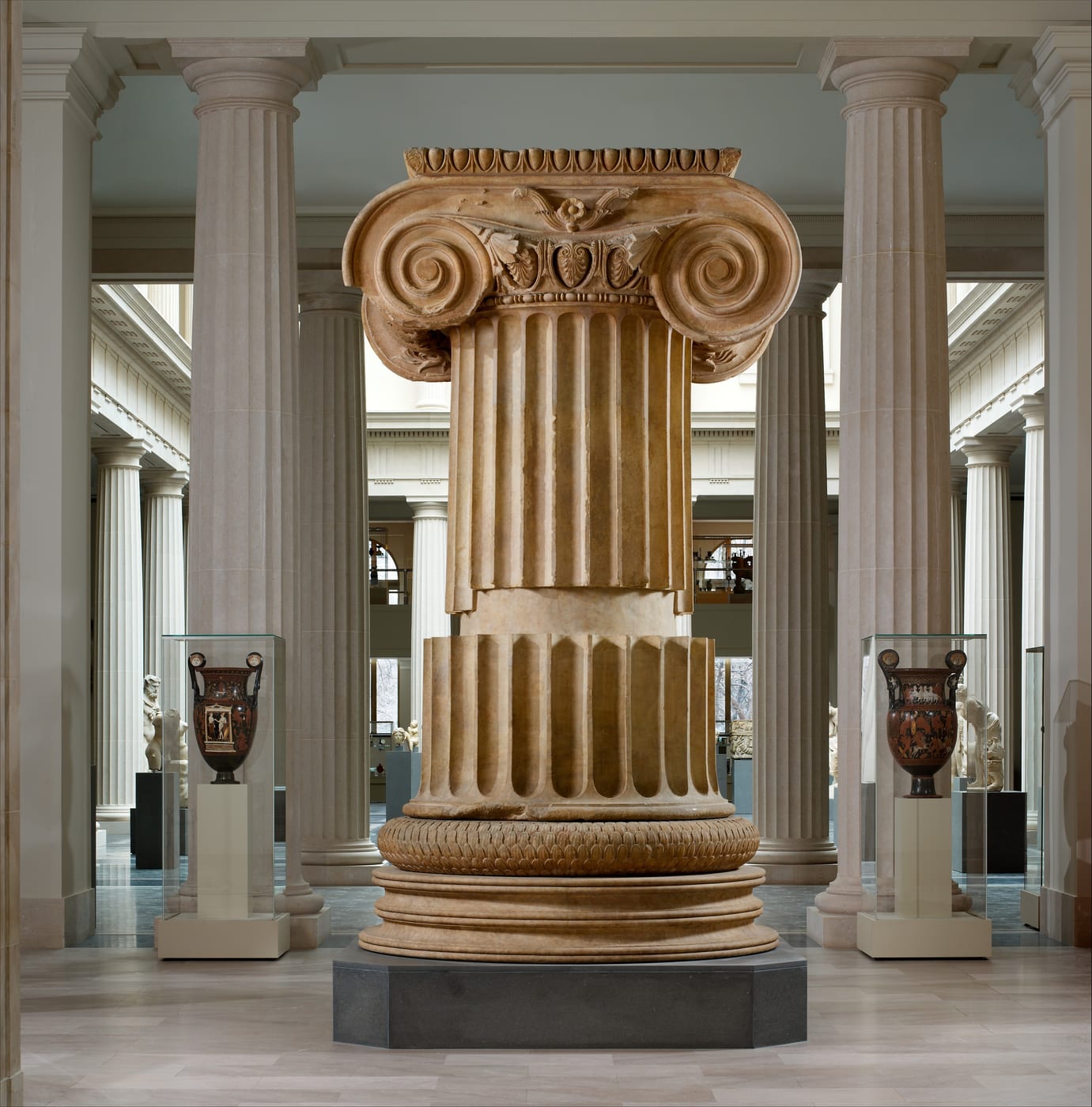
A large marble Greek column with spiral shapes at the top in a museum gallery.
Greek marble column from the Temple of Artemis at Sardis, from The Metropolitan Museum of Art Open Access collection.

Source

Typeartwork

TitleMarble column from the Temple of Artemis at Sardis

CreatorUnknown Greek maker

Licensepublic-domain

Levelearly-1

Story Beats

5
Beat 1beat-setupnarration

This is a Greek marble column from the Temple of Artemis at Sardis. A column is a tall support used in a building.

Conceptsgreek-column, temple-of-artemis-sardis

Beat 1 note
Beat 2beat-guided-questionnarrationsource-fact

The Metropolitan Museum of Art says this column came from a temple. The temple was for Artemis.

Conceptstemple-of-artemis-sardis

Beat 2 note
Beat 3beat-materialchoicesource-fact

The column is made from marble. Marble is a stone that artists and builders used for important works.

PromptWhat material is this column made from?

terracotta claymarblewood

Expectedmarble

Evaluationcorrect if the child chooses marble

Look first

What do you notice about the column's stone surface?

The surface looks light cream or yellowish; the museum identifies the stone as marble.

Conceptsmarble, greek-column

Beat 3 note
Beat 4beat-capitalrecallvisible-evidence

The top part of the column is called a capital. This one has spiral shapes, so it is called an Ionic capital.

PromptWhat kind of capital is at the top?

Corinthian capitalDoric capitalIonic capital

ExpectedIonic capital

Evaluationcorrect if the child chooses Ionic capital

Look first

Look at the top of the column.

The top has spiral shapes.

Conceptsionic-capital, visible-spirals

Beat 4 note
Beat 5beat-recaprecap

Remember the art-history facts: Greek column, marble, and Ionic capital. The museum also says this column came from the Temple of Artemis at Sardis.

Conceptsgreek-column, temple-of-artemis-sardis, marble, ionic-capital

Beat 5 note

Memory Cards

3
Card 1card-object-typesimple-fact-recallvisible-evidence

PromptWhat kind of building part is this Greek object?

columncoinmask

Answercolumn

Conceptgreek-column

Initialnew

Look first

Look at the tall stone support.

The object is a column.
Card 1 note
Card 2card-materialsimple-fact-recallsource-fact

PromptThe Met says this Greek column is made from which stone?

bronzemarblepaper

Answermarble

Conceptmarble

Initialnew

Card 2 note
Card 3card-capitalsimple-fact-recallvisible-evidence

PromptWhat kind of capital has spiral shapes at the top?

red-figure techniquestone roadIonic capital

AnswerIonic capital

Conceptionic-capital

Initialnew

Look first

Look at the top of the column.

The top has spiral shapes.
Card 3 note

Art History

The Marble Lion

Source
Overall review note
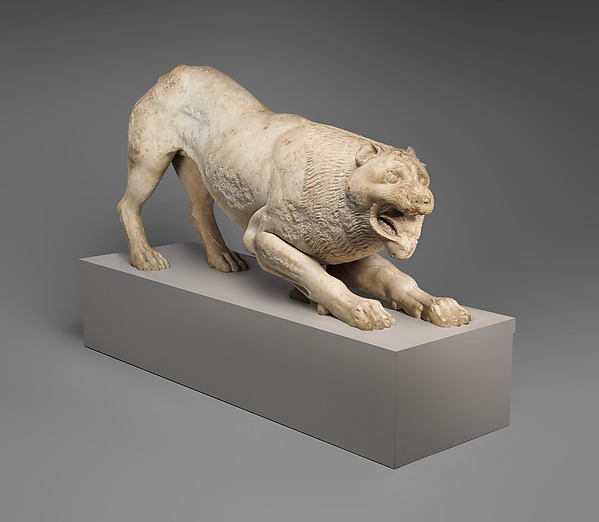
A Greek marble lion statue lying down with its head raised.
Greek Classical marble statue of a lion, from The Metropolitan Museum of Art Open Access collection.

Source

Typeartwork

TitleMarble statue of a lion

CreatorUnknown Greek maker

Licensepublic-domain

Levelearly-1

Story Beats

5
Beat 1beat-setupnarration

This is an ancient Greek marble statue of a lion. A statue is a work of art shaped to look like a person, animal, or thing.

Conceptsgreek-lion-statue, ancient-greek

Beat 1 note
Beat 2beat-guided-questionchoicesource-fact

The Metropolitan Museum of Art says the lion is Greek. It was made in the Classical period, about 400 to 390 BCE.

PromptWhat culture made this lion statue?

GreekRoman roadpaper book

ExpectedGreek

Evaluationcorrect if the child chooses Greek

Conceptsancient-greek, classical-period

Beat 2 note
Beat 3beat-materialchoicevisible-evidence

The lion is made from marble. Marble is a stone that Greek sculptors used for important statues.

PromptWhat material is this lion made from?

terracotta claymarblewood

Expectedmarble

Evaluationcorrect if the child chooses marble

Look first

What do you notice about the lion's carved surface?

The surface looks like carved stone; the museum identifies the stone as marble.

Conceptsmarble, greek-lion-statue

Beat 3 note
Beat 4beat-formrecallvisible-evidence

Look at the lion's body. The sculptor carved the lion lying down, with its head raised.

PromptWhat animal is shown lying down with its head raised?

horseowllion

Expectedlion

Evaluationcorrect if the child chooses lion

Look first

Look at the animal's body and raised head.

The animal has a long body and a raised head.

Conceptslion, visible-form

Beat 4 note
Beat 5beat-recaprecap

Remember the art-history facts: Greek, marble, statue, and lion lying down with its head raised.

Conceptsancient-greek, classical-period, marble, greek-lion-statue, lion

Beat 5 note

Memory Cards

4
Card 1card-object-typesimple-fact-recallvisible-evidence

PromptWhat kind of artwork is this Greek lion?

statuecoinroad

Answerstatue

Conceptgreek-lion-statue

Initialnew

Look first

Look at the carved animal shape.

The lion is carved as a statue.
Card 1 note
Card 2card-materialsimple-fact-recallsource-fact

PromptWhat material is the Greek lion statue made from?

woodmarblepaper

Answermarble

Conceptmarble

Initialnew

Card 2 note
Card 3card-culturesimple-fact-recallsource-fact

PromptWhat culture made this marble lion statue?

RomanGreekEgyptian

AnswerGreek

Conceptancient-greek

Initialnew

Card 3 note
Card 4card-animalsimple-fact-recallvisible-evidence

PromptWhat animal is shown in this marble statue?

amphoralioncolumn

Answerlion

Conceptlion

Initialnew

Look first

Look at the animal's body and raised head.

The animal has a long body and a raised head.
Card 4 note

Art History

The Roman Mosaic

Source
Overall review note
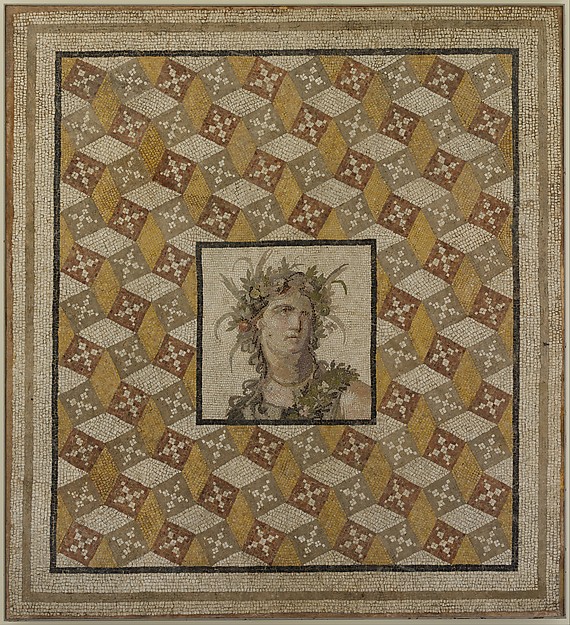
A Roman mosaic floor panel showing the head of Spring surrounded by patterned pieces.
Roman Imperial mosaic floor panel with the head of Spring, from The Metropolitan Museum of Art Open Access collection.

Source

Typeartwork

TitleMosaic floor panel

CreatorUnknown Roman maker

Licensepublic-domain

Levelearly-1

Story Beats

5
Beat 1beat-setupnarration

This is a Roman mosaic floor panel. A mosaic is a picture or pattern made from many small pieces set together.

Conceptsroman-mosaic, mosaic

Beat 1 note
Beat 2beat-guided-questionchoicesource-fact

The Metropolitan Museum of Art says this mosaic is Roman. It was made in the Imperial period, in the 2nd century CE.

PromptWhat culture made this mosaic?

Greekpaper bookRoman

ExpectedRoman

Evaluationcorrect if the child chooses Roman

Conceptsroman, imperial-period

Beat 2 note
Beat 3beat-materialchoicevisible-evidence

The mosaic is made from stone, tile, and glass. Those small hard pieces helped make the picture on the floor.

PromptWhat materials are in this mosaic?

stone, tile, and glasswood and woolpainted paper

Expectedstone, tile, and glass

Evaluationcorrect if the child chooses stone, tile, and glass

Look first

Look at the many small hard pieces set together.

The picture is built from many small hard pieces.

Conceptsstone-tile-glass, mosaic

Beat 3 note
Beat 4beat-visible-formrecallsource-fact

Look at the middle of the mosaic. The museum calls this the head of Spring, so a season is shown like a person.

PromptWhat season is shown in the middle?

WinterSpringa road

ExpectedSpring

Evaluationcorrect if the child chooses Spring

Look first

Look at the middle of the mosaic.

The central figure is the head of Spring.

Conceptsspring, visible-form

Beat 4 note
Beat 5beat-recaprecap

Remember the art-history facts: Roman, mosaic, Imperial period, stone, tile, and glass, and the head of Spring.

Conceptsroman, mosaic, imperial-period, stone-tile-glass, spring

Beat 5 note

Memory Cards

3
Card 1card-object-typesimple-fact-recallvisible-evidence

PromptWhat is a picture or pattern made from many small pieces called?

columnmosaicamphora

Answermosaic

Conceptmosaic

Initialnew

Look first

Look for the many small pieces set together.

The picture is a mosaic.
Card 1 note
Card 2card-culturesimple-fact-recallsource-fact

PromptWhat culture made this mosaic floor panel?

GreekwoodenRoman

AnswerRoman

Conceptroman

Initialnew

Card 2 note
Card 3card-materialssimple-fact-recallsource-fact

PromptWhat materials are in this Roman mosaic?

stone, tile, and glasspaper and inkmarble only

Answerstone, tile, and glass

Conceptstone-tile-glass

Initialnew

Card 3 note

Art History

The Roman Glass Jug

Source
Overall review note
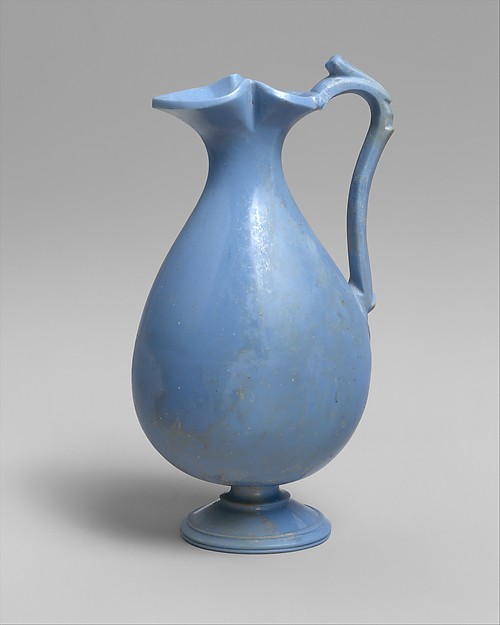
A Roman glass jug with a rounded body, narrow neck, handle, and small pouring mouth.
Roman Early Imperial glass oinochoe, or jug, from The Metropolitan Museum of Art Open Access collection.

Source

Typeartwork

TitleGlass oinochoe (jug)

CreatorUnknown Roman maker

Licensepublic-domain

Levelearly-1

Story Beats

5
Beat 1beat-setupnarration

This is a Roman glass oinochoe. An oinochoe is a kind of jug, with a body, a neck, a handle, and a mouth for pouring.

Conceptsroman-glass-oinochoe, oinochoe

Beat 1 note
Beat 2beat-object-typechoicevisible-evidence

The Metropolitan Museum of Art calls this object a glass oinochoe, or jug.

PromptWhat kind of object is this?

a columna juga mosaic

Expecteda jug

Evaluationcorrect if the child chooses a jug

Look first

Look for the body, neck, handle, and small mouth.

The object has a body, neck, handle, and small mouth.

Conceptsoinochoe, jug

Beat 2 note
Beat 3beat-culturechoicesource-fact

The museum says this glass jug is Roman. It was made in the Early Imperial period.

PromptWhat culture made this glass jug?

RomanGreekpaper

ExpectedRoman

Evaluationcorrect if the child chooses Roman

Conceptsroman, early-imperial-period

Beat 3 note
Beat 4beat-materialchoicevisible-evidence

This jug is made from glass. Ancient Roman makers could shape glass into useful and beautiful vessels.

PromptWhat material is this jug made from?

marblewoodglass

Expectedglass

Evaluationcorrect if the child chooses glass

Look first

Look at the smooth, shining surface of the jug.

The surface looks smooth and shining.

Conceptsglass, vessel

Beat 4 note
Beat 5beat-recaprecap

Remember the art-history facts: Roman, Early Imperial, glass, oinochoe, and jug for pouring.

Conceptsroman, early-imperial-period, glass, oinochoe, jug

Beat 5 note

Memory Cards

4
Card 1card-object-typecloze-recallvisible-evidence

PromptAn oinochoe is a kind of ancient ___.

a columna juga lion

Answera jug

Conceptjug

Initialnew

Look first

What parts help this object work like a jug?

It has a body, neck, handle, and small mouth.
Card 1 note
Card 2card-culturesimple-fact-recallsource-fact

PromptWhat culture made this glass jug?

RomanGreekEgyptian

AnswerRoman

Conceptroman

Initialnew

Card 2 note
Card 3card-materialsimple-fact-recallsource-fact

PromptThe Met says this Roman jug is made from which material?

marbleclayglass

Answerglass

Conceptglass

Initialnew

Card 3 note
Card 4card-usecloze-recallvisible-evidence

PromptA jug is shaped to help people ___.

stand in a templepourmake a floor picture

Answerpour

Conceptjug

Initialnew

Look first

What do the handle and small mouth help someone do?

The jug shape helps with pouring.
Card 4 note

Art History

The Athenian Coin

Source
Overall review note
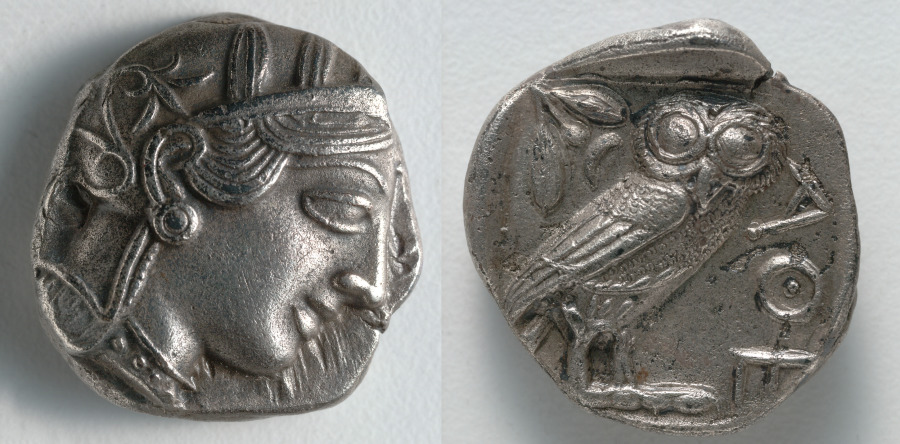
A Greek silver coin showing the head of Athena on one side and an owl with letters on the other side.
Greek silver tetradrachm minted at Athens, with Athena and an owl, from The Cleveland Museum of Art Open Access collection.

Source

Typeartwork

TitleTetradrachm: Head of Athena (obverse); Owl (reverse)

CreatorUnknown Greek maker

LicenseCC0

Levelearly-1

Story Beats

5
Beat 1beat-setupnarration

This is an ancient Greek coin. A coin is a small metal object with images or writing on it.

Look first

Look at the round metal object and the pictures on both sides.

The object is a small coin with images.

Conceptscoin, metal-object

Beat 1 note
Beat 2beat-placechoicesource-fact

The Cleveland Museum of Art says this coin was minted at Athens. Minted means made as a coin.

PromptWhere was this coin minted?

a forestAthensa river

ExpectedAthens

Evaluationcorrect if the child chooses Athens

Look first

Look for the letters beside the owl.

The letters mark the coin as Athenian.

Conceptsathens, minted

Beat 2 note
Beat 3beat-materialchoicevisible-evidence

This Athenian coin is made from silver. Silver is a metal that can shine.

PromptWhat material is this coin made from?

claysilvermarble

Expectedsilver

Evaluationcorrect if the child chooses silver

Look first

What do you notice about the coin's metal surface?

The surface looks light and metallic; the museum identifies the metal as silver.

Conceptssilver, coin

Beat 3 note
Beat 4beat-imagechoicevisible-evidence

One side of the coin shows Athena. The other side shows an owl.

PromptWhat bird is shown on one side of the coin?

owllionhorse

Expectedowl

Evaluationcorrect if the child chooses owl

Look first

Look at the bird beside the letters.

The bird on the coin is an owl.

Conceptsathena, owl

Beat 4 note
Beat 5beat-recaprecap

Remember the art-history facts: Greek, coin, silver, Athena, and owl. The museum also says the coin was minted at Athens.

Conceptsgreek, coin, athens, silver, athena, owl

Beat 5 note

Memory Cards

3
Card 1card-object-typesimple-fact-recallvisible-evidence

PromptWhat is this small metal object with images called?

coincolumnmosaic

Answercoin

Conceptcoin

Initialnew

Look first

Look at the small round object.

The object is a coin.
Card 1 note
Card 2card-materialsimple-fact-recallvisible-evidence

PromptThe Cleveland Museum of Art says this coin is made from which metal?

marbleclaysilver

Answersilver

Conceptsilver

Initialnew

Look first

What do you notice about the coin's metal surface?

The surface looks light and metallic; the museum identifies the metal as silver.
Card 2 note
Card 3card-visible-detailsimple-fact-recallvisible-evidence

PromptWhat bird is shown on an Athenian owl coin?

horseowllion

Answerowl

Conceptowl

Initialnew

Look first

What bird do you see beside the letters?

The bird is an owl.
Card 3 note

Art History

The Roman Relief

Source
Overall review note
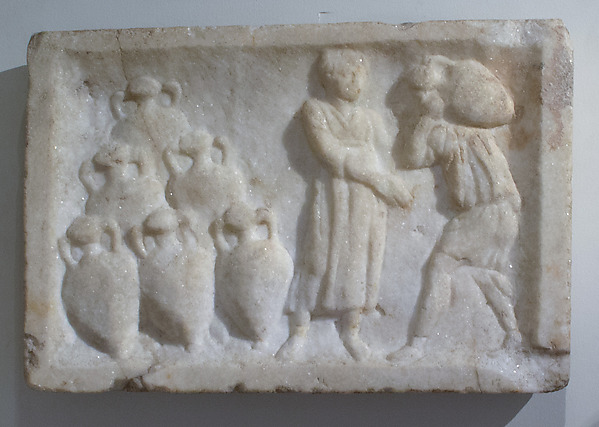
A Roman marble relief with raised carved figures and large amphora jars.
Roman Mid-Imperial marble relief showing transport amphorae, from The Metropolitan Museum of Art Open Access collection.

Source

Typeartwork

TitleMarble relief showing transport amphorae

CreatorUnknown Roman maker

Licensepublic-domain

Levelearly-1

Story Beats

5
Beat 1beat-setupnarration

This is a Roman marble relief. A relief is a carved picture where the shapes rise up from the background.

Look first

Look at how the carved shapes rise from the flat stone.

The figures and jars stand out from the background.

Conceptsroman, relief, raised-carving

Beat 1 note
Beat 2beat-guided-questionchoicevisible-evidence

The Metropolitan Museum of Art calls this object a relief of a wine-shop. The carving shows transport amphorae, large jars used for moving things like wine or oil.

PromptWhat large jars are shown in this relief?

amphoraecolumnscoins

Expectedamphorae

Evaluationcorrect if the child chooses amphorae

Look first

Look for the large jar shapes in the carving.

The relief shows large amphora jars.

Conceptstransport-amphorae, wine-shop-relief

Beat 2 note
Beat 3beat-materialchoicevisible-evidence

This relief is made from marble. Marble is a kind of stone that ancient artists carved into shapes.

PromptWhat material is this relief made from?

glassclaymarble

Expectedmarble

Evaluationcorrect if the child chooses marble

Look first

Look at the pale stone surface of the relief.

The relief is carved from marble stone.

Conceptsmarble, relief

Beat 3 note
Beat 4beat-reliefrecallvisible-evidence

In a relief, the carved figures are not fully separate statues. They stay attached to the background but rise out from it.

PromptWhat does a relief have?

a painted paper pageraised carvinga glass handle

Expectedraised carving

Evaluationcorrect if the child chooses raised carving

Look first

Look at the raised edges of the figures and jars.

The carved picture rises from the background.

Conceptsraised-carving, relief

Beat 4 note
Beat 5beat-recaprecap

Remember the art-history facts: Roman, marble, relief, raised carving, and transport amphorae.

Conceptsroman, marble, relief, raised-carving, transport-amphorae

Beat 5 note

Memory Cards

4
Card 1card-object-typesimple-fact-recallvisible-evidence

PromptWhat is a carved picture with shapes raised from the background called?

mosaicreliefcoin

Answerrelief

Conceptrelief

Initialnew

Look first

Look at the raised carving.

The shapes rise from the stone background.
Card 1 note
Card 2card-culturesimple-fact-recallsource-fact

PromptWhat culture made this marble relief?

RomanGreekpaper

AnswerRoman

Conceptroman

Initialnew

Card 2 note
Card 3card-materialsimple-fact-recallvisible-evidence

PromptWhat material is this relief made from?

glassclaymarble

Answermarble

Conceptmarble

Initialnew

Look first

Look at the pale stone surface.

The relief is marble.
Card 3 note
Card 4card-visible-formsimple-fact-recallvisible-evidence

PromptWhat large jars are shown in this Roman relief?

columnsamphoraecoins

Answeramphorae

Concepttransport-amphorae

Initialnew

Look first

Look for the large jar shapes.

The relief shows transport amphorae.
Card 4 note

Pack

ancient-history-early-1

explicitly-registered-fixture

Ancient History

The Roman Forum

Source
Overall review note
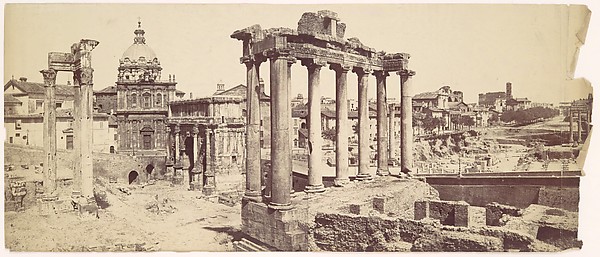
An old photograph of the Roman Forum with tall columns, stone ruins, and open space.
Felix Bonfils, [The Roman Forum], ca. 1870s, from The Metropolitan Museum of Art Open Access collection.

Source

Typepublic-domain-text

TitleA Topographical Dictionary of Ancient Rome: Forum Romanum sive Magnum; [The Roman Forum]

CreatorSamuel Ball Platner, Thomas Ashby, and Felix Bonfils

Licensepublic-domain

Levelearly-1

Story Beats

5
Beat 1beat-setupnarration

This old photograph shows the Roman Forum. The Forum was an important public place in ancient Rome.

Look first

Look for the open space and the tall columns.

The photograph shows an open Roman place with stone ruins and columns.

Conceptsroman-forum, public-place, rome

Beat 1 note
Beat 2beat-public-placechoice

A public place is not one family's private room. It is a place where many people can come.

PromptWhat kind of place was the Forum?

public placeprivate bedroomforest path

Expectedpublic place

Evaluationcorrect if the child chooses public place

Conceptspublic-place, roman-forum

Beat 2 note
Beat 3beat-citychoice

The Forum was in Rome. Rome was an ancient city.

PromptWhich city had the Forum in this lesson?

AthensRomeAlexandria

ExpectedRome

Evaluationcorrect if the child chooses Rome

Conceptsrome, roman-forum

Beat 3 note
Beat 4beat-functionrecall

People could meet, listen, trade, and do public work in the Forum.

PromptWhat could people do in the Forum?

meet and worksleep in bedsail at sea

Expectedmeet and work

Evaluationcorrect if the child chooses meet and work

Conceptspublic-life-function, roman-forum

Beat 4 note
Beat 5beat-recaprecap

Remember the ancient-history facts: the Roman Forum was a public place in Rome where people could meet and do public work.

Conceptsroman-forum, public-place, rome, public-life-function

Beat 5 note

Memory Cards

4
Card 1card-forum-namecloze-recall

PromptAn important public place in ancient Rome was the ___.

Roman ForumGreek jarglass jug

AnswerRoman Forum

Conceptroman-forum

Initialnew
Card 1 note
Card 2card-forum-kindsimple-fact-recall

PromptWhat kind of place was the Roman Forum?

private bedroompublic placeforest path

Answerpublic place

Conceptpublic-place

Initialnew

Card 2 note
Card 3card-forum-citysimple-fact-recall

PromptThe Roman Forum was in which city?

AthensAlexandriaRome

AnswerRome

Conceptrome

Initialnew

Card 3 note
Card 4card-forum-functionsimple-fact-recall

PromptWhat could people do in the Forum?

swim and fishmeet and workpaint a vase

Answermeet and work

Conceptpublic-life-function

Initialnew

Card 4 note

Ancient History

The Roman Road

Source
Overall review note
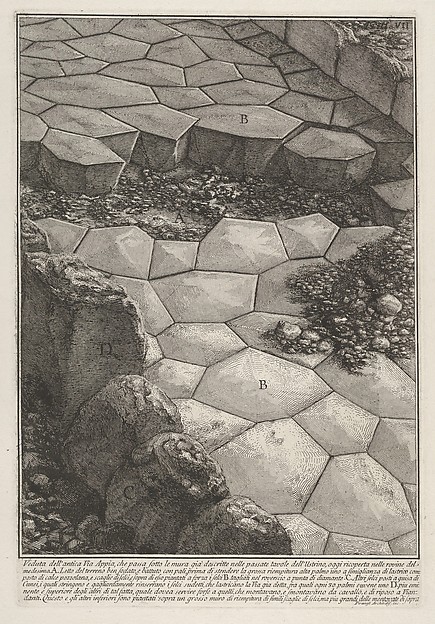
An old print showing large flat stones fitted together as pavement on the Appian Way.
Giovanni Battista Piranesi, View of the stone pavement of the Appian Way, 1756, from The Metropolitan Museum of Art Open Access collection.

Source

Typepublic-domain-text

TitleA Topographical Dictionary of Ancient Rome: Via Appia

CreatorSamuel Ball Platner and Thomas Ashby

Licensepublic-domain

Levelearly-1

Story Beats

5
Beat 1beat-setupnarration

This old print shows stone pavement on the Appian Way. The Appian Way was a Roman road.

Look first

Look at the flat stones fitted together.

The image shows stone pavement on a Roman road.

Conceptsappian-way, roman-road, stone-pavement

Beat 1 note
Beat 2beat-road-kindchoice

A road is a path that helps people go from one place to another.

PromptWhat does a road help people do?

move between placessleep in bedhold water

Expectedmove between places

Evaluationcorrect if the child chooses move between places

Conceptsroad-function, roman-road

Beat 2 note
Beat 3beat-stoneschoice

The picture shows big flat stones. Stones could make a road firmer than soft mud.

PromptWhat do you see on this road?

flat stonesfeathersglass cups

Expectedflat stones

Evaluationcorrect if the child chooses flat stones

Look first

Look closely at the road surface.

The road surface is made from large flat stones.

Conceptsstone-pavement, roman-road

Beat 3 note
Beat 4beat-movingrecall

A Roman road could help people, carts, and messages move from place to place.

PromptWhat could move along a Roman road?

people and cartsfish in a bowlstars in the sky

Expectedpeople and carts

Evaluationcorrect if the child chooses people and carts

Conceptsroad-function, people-and-carts

Beat 4 note
Beat 5beat-recaprecap

Remember the ancient-history facts: the Appian Way was a Roman road, its pavement had flat stones, and roads helped people and carts move between places.

Conceptsappian-way, roman-road, stone-pavement, road-function, people-and-carts

Beat 5 note

Memory Cards

4
Card 1card-road-namesimple-fact-recall

PromptWhat was the Appian Way?

Roman roadGreek jarglass jug

AnswerRoman road

Conceptappian-way

Initialnew

Card 1 note
Card 2card-road-functionsimple-fact-recall

PromptWhat does a road help people do?

hold watermove between placessleep in bed

Answermove between places

Conceptroad-function

Initialnew

Card 2 note
Card 3card-road-stonescloze-recall

PromptA Roman road like the Appian Way could have pavement made from ___.

flat stonesfeathersglass cups

Answerflat stones

Conceptstone-pavement

Initialnew

Card 3 note
Card 4card-road-movingsimple-fact-recall

PromptWhat could move along a Roman road?

fish in a bowlpeople and cartsstars in the sky

Answerpeople and carts

Conceptpeople-and-carts

Initialnew

Card 4 note

Ancient History

The Greek Agora

Source
Overall review note
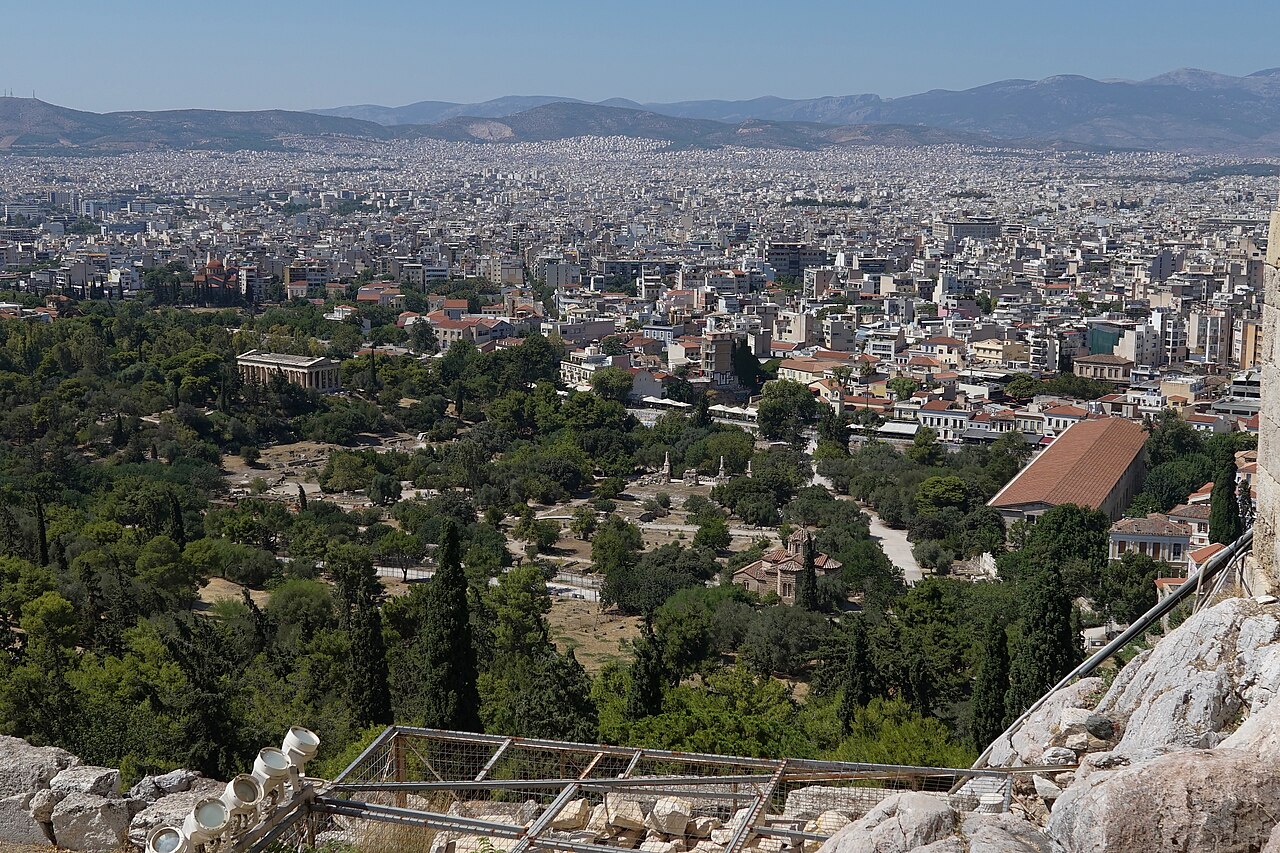
A wide view of the Ancient Agora of Athens with open ground, trees, ruins, the Stoa of Attalos, and the modern city around it.
George E. Koronaios, View of the Ancient Agora of Athens from the Acropolis on July 30, 2020, CC0 via Wikimedia Commons.

Source

Typepublic-domain-text

TitleA Dictionary of Greek and Roman Antiquities: Agora

CreatorWilliam Smith, William Wayte, and G. E. Marindin

Licensepublic-domain

Levelearly-1

Story Beats

5
Beat 1beat-setupnarration

This diagram shows a Greek agora. An agora was a public gathering place in a Greek city.

Look first

Look for the open middle space and the columns around it.

The photograph shows an open ancient place with ruins, trees, and the Stoa of Attalos in Athens.

Conceptsgreek-agora, public-gathering-place, greek-city

Beat 1 note
Beat 2beat-place-kindchoice

A gathering place is where people can come together.

PromptWhat kind of place was an agora?

gathering placeprivate bedroomdeep cave

Expectedgathering place

Evaluationcorrect if the child chooses gathering place

Conceptspublic-gathering-place, greek-agora

Beat 2 note
Beat 3beat-greek-citychoice

In this lesson, the agora is a Greek place. Athens had an important agora.

PromptWas the agora in this lesson Greek or Roman?

GreekRomanEgyptian

ExpectedGreek

Evaluationcorrect if the child chooses Greek

Conceptsgreek-city, athens, greek-agora

Beat 3 note
Beat 4beat-functionrecall

People could meet and buy or sell things in an agora.

PromptWhat could people do in an agora?

meet and tradesleep in bedrow a boat

Expectedmeet and trade

Evaluationcorrect if the child chooses meet and trade

Conceptspublic-life-function, market-place, greek-agora

Beat 4 note
Beat 5beat-recaprecap

Remember the ancient-history facts: an agora was a Greek public gathering place. People could meet and trade there.

Conceptsgreek-agora, public-gathering-place, greek-city, market-place, public-life-function

Beat 5 note

Memory Cards

4
Card 1card-agora-namecloze-recall

PromptA public gathering place in a Greek city was an ___.

agoraAppian Wayglass jug

Answeragora

Conceptgreek-agora

Initialnew

Card 1 note
Card 2card-agora-kindsimple-fact-recall

PromptWhat kind of place was an agora?

deep cavegathering placeprivate bedroom

Answergathering place

Conceptpublic-gathering-place

Initialnew

Card 2 note
Card 3card-agora-greeksimple-fact-recall

PromptWas an agora a Greek or Roman public place?

RomanEgyptianGreek

AnswerGreek

Conceptgreek-city

Initialnew

Card 3 note
Card 4card-agora-functionsimple-fact-recall

PromptWhat could people do in an agora?

row a boatmeet and tradesleep in bed

Answermeet and trade

Conceptmarket-place

Initialnew

Card 4 note

Ancient History

The Roman Oil Lamp

Source
Overall review note
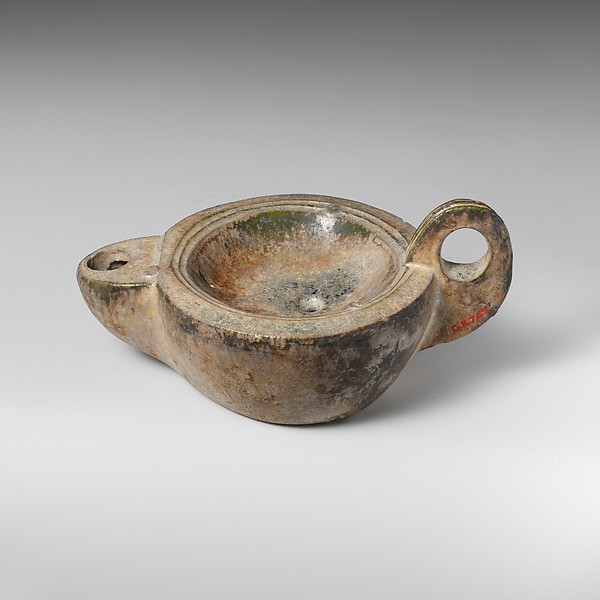
A small ancient Roman terracotta oil lamp with a rounded bowl, a short spout, and a loop handle.
Roman, Terracotta oil lamp, 1st century CE, from The Metropolitan Museum of Art Open Access collection.

Source

Typeartifact

TitleTerracotta oil lamp

CreatorRoman

Licensepublic-domain

Levelearly-1

Story Beats

5
Beat 1beat-setupnarration

{{guide.name}}'s teacher sets down a small clay lamp and lowers the room light. It is not a candle. In ancient Rome, people could use oil lamps like this when the light was low.

Look first

Look for the small spout on one side and the handle on the other side.

The photograph shows a Roman oil lamp with a spout and handle.

Conceptsdaily-life-object, roman-oil-lamp, roman, light

Beat 1 note
Beat 2beat-oilchoice

{{guide.name}} leans closer and sees the round middle. That part could hold oil, the fuel that helped the lamp burn.

PromptWhat fuel could go inside a Roman oil lamp?

oilsandrainwater

Expectedoil

Evaluationcorrect if the child chooses oil

Look first

Look at the round middle part of the lamp.

The round middle part could hold oil for the lamp.

Conceptsoil, roman-oil-lamp

Beat 2 note
Beat 3beat-wickchoice

The spout gives {{guide.name}} another clue. A wick could rest there, and when the wick was lit, the lamp could make a small flame.

PromptWhat part could be lit to make a small flame?

handlewickshadow

Expectedwick

Evaluationcorrect if the child chooses wick

Look first

Look for the short spout at the left side of the lamp.

The spout is where a wick could sit.

Conceptswick, flame, light, roman-oil-lamp

Beat 3 note
Beat 4beat-material-and-userecall

The little lamp is not shiny metal. Many Roman oil lamps were ceramic, made from fired clay. Fired clay like this is called terracotta.

PromptWhat fired-clay material could Roman oil lamps be made from?

glasssilverterracotta

Expectedterracotta

Evaluationcorrect if the child chooses terracotta

Conceptsterracotta, roman, daily-life-object

Beat 4 note
Beat 5beat-recaprecap

Now {{guide.name}} can explain the little lamp: in ancient Rome, an oil lamp was a common way to make light. Oil went inside, a wick could be lit, and many Roman oil lamps were made from fired clay.

Conceptsroman-oil-lamp, roman, terracotta, oil, wick, flame, light, daily-life-object

Beat 5 note

Memory Cards

4
Card 1card-lamp-objectcloze-recall

PromptA common way to make light in ancient Rome was to use an ___.

oil lamproad stoneGreek agora

Answeroil lamp

Conceptroman-oil-lamp

Initialnew

Card 1 note
Card 2card-lamp-oilcloze-recall

PromptRoman oil lamps used ___ as fuel.

sandrainwateroil

Answeroil

Conceptoil

Initialnew

Card 2 note
Card 3card-lamp-wickcloze-recall

PromptA ___ in an oil lamp could be lit to make a small flame.

wickhandleshadow

Answerwick

Conceptwick

Initialnew

Card 3 note
Card 4card-lamp-materialcloze-recall

PromptA common fired-clay material for Roman oil lamps was ___.

glassterracottasilver

Answerterracotta

Conceptterracotta

Initialnew

Card 4 note